Cocktail · Reception
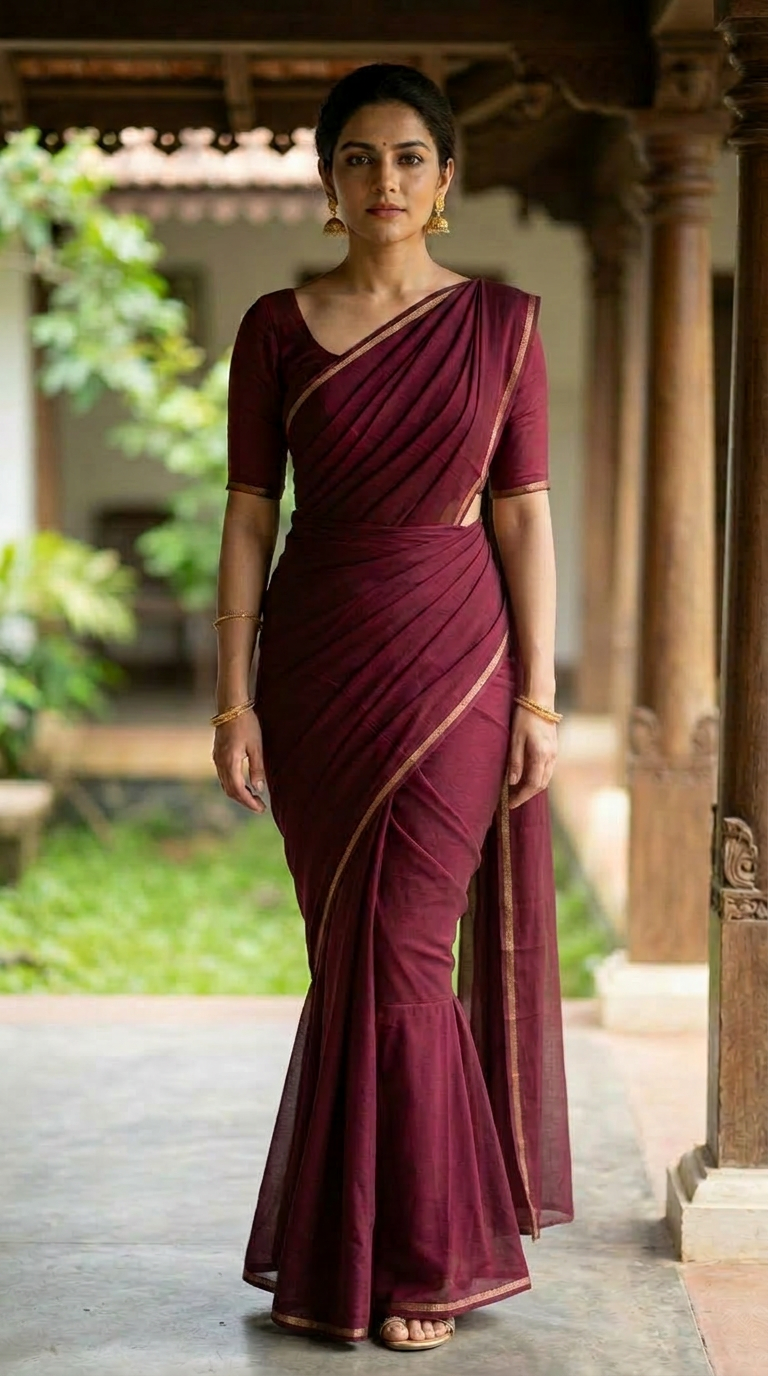
The Mumtaz mermaid
The 1960s Bollywood revival drape — fitted, sleek, and built for an evening of dancing.
- Drape time
- 20–25 min
- Help
- Easier with help
- Yardage
- 6 yd
Comfort scale
4/5
Occasion
Fabric
Body style
Stylist note · Fitted diagonal wraps suit petites and regular frames. Plus-size clients often prefer the butterfly pallu instead for the same evening register.
You will need
Before you begin
- ·Shapewear (mid-thigh to bust) — the Mumtaz silhouette is entirely contour-driven
- ·5 in pumps or strappy heels; the drape elongates and demands height
- ·12 small safety pins, 4 invisible saree pins, double-sided fashion tape
- ·Smoothing slip or seamless slip dress; the diagonal turns reveal every contour
- ·A second pair of hands — the diagonal turns cannot be self-set with the required tension
Pre-drape prep
- 1.Steam georgette or satin on the lowest setting; sequins must never touch direct heat.
- 2.Wear shapewear first and let it settle for fifteen minutes before draping.
- 3.Tie any backup petticoat at the natural waist, snug — the drape needs a smooth base.
- 4.Pre-fit the corset or backless blouse with all hooks closed; the diagonal turns layer on top.
Step-by-step
4 steps
Step 1 of 4
Choose a soft, slinky fabric — georgette, satin or pre-stitched sequin.
Step 2 of 4
Skip front pleats; wrap the saree snugly around the hips in three to four diagonal turns.
Step 3 of 4
Each turn should overlap the last by an inch so the silhouette stays fitted.
Step 4 of 4
Bring the final layer up as a sleek pallu over the left shoulder, no pleats.
Pleat & pallu anatomy
Why the drape sits the way it does
Mumtaz mermaid eliminates front pleats entirely. The saree wraps the body in three to four diagonal turns from hip downward, each overlapping the previous by an inch so the silhouette tapers like a mermaid tail. The final layer rises across the front and over the left shoulder as a sleek, unpleated pallu. The drape was invented for Mumtaz's 1960s screen wardrobe — built to move, photograph and dance under stage lights.
Fabric note
Choosing the right cloth
Slinky georgette, satin-silk, chiffon or pre-stitched sequin sarees. Avoid any stiff fabric — Kanjivaram, tissue, organza, heavy banarasi all refuse the diagonal wrap. If the saree has scattered sequin work, plan the turns so heavy panels do not stack on top of each other (creates lumps). Soft, fluid, ideally semi-stretch.
Blouse pairing
Neckline · sleeve · lining
Corset, halter, backless or deep-back sequinned blouse — the back IS the silhouette. The pallu is sleek and narrow precisely so the blouse reads as the centrepiece. Make sure the corset has front-zip plus hook closures; the pallu pins to it and tugs throughout the evening.
Jewellery & finish
The last layer
Statement chandbalis, no necklace; let the back do the talking.
Hair & makeup register
The full silhouette
Sleek high ponytail or polished Hollywood waves. Smokey eye, glossy nude or wine lip, defined collarbone highlight. Statement chandbalis and no necklace — the bare back is the showpiece. Body shimmer along the collarbone and shoulders is optional but on-brand for the 1960s revival.
By silhouette
Stylist-curated for every body
petite
Reduce to three diagonal turns and keep the pallu fall to the elbow; four turns can overwhelm a petite frame.
regular
The classic three-to-four turns with the pallu falling to mid-hip reads beautifully.
Plus-size
Mumtaz mermaid is exceptionally flattering on plus-size frames when wrapped correctly — the diagonal taper elongates. Use the full four turns with very firm shapewear, and let the pallu fall to mid-thigh for height. Avoid stiff sequins; stick to fluid georgette.
Troubleshooting
If something slips
Diagonal turns slipping during dancing
Pin invisibly through the shapewear at each turn's overlap point — three invisible pins total.
Pallu folding back on itself
Use double-sided fashion tape along the shoulder seam to anchor the sleek pallu line.
Silhouette breaking at the knee instead of tapering
Re-do the last turn tighter; the bottom turn should grip the calf to create the mermaid taper.
Sequins catching on the corset
Layer a thin smoothing slip between corset and saree; protects both sides.
Common mistakes
What not to do
- Adding front pleats out of Nivi habit — Mumtaz is pleatless by design.
- Choosing stiff fabric — Mumtaz requires soft, fluid drape.
- Skipping shapewear — the diagonal turns reveal every contour.
- Wearing a high-coverage blouse — defeats the entire backless silhouette logic.
Care after wearing
So the saree lasts
- ·Hang on a padded hanger immediately; never fold sequinned sarees warm.
- ·Dry-clean only with a sequin-specialist cleaner; standard cleaning sheds sequins.
- ·Store flat in an acid-free box, sequins facing up, between layers of tissue.
- ·Inspect sequin attachment after each wear; re-stitch loose sequins before storage.
Stylist's final check
Before the mirror
- Three to four diagonal turns are visible from hip downward, each tighter than the last.
- Silhouette tapers to a mermaid line at the calf.
- Pallu sits sleek and unpleated over the left shoulder.
- Back of the blouse is fully exposed — no saree fabric covering the showpiece.
- Hemline allows confident strides; the drape moves with you, not against.