Temple · Daily darshan
The Neyveli temple drape
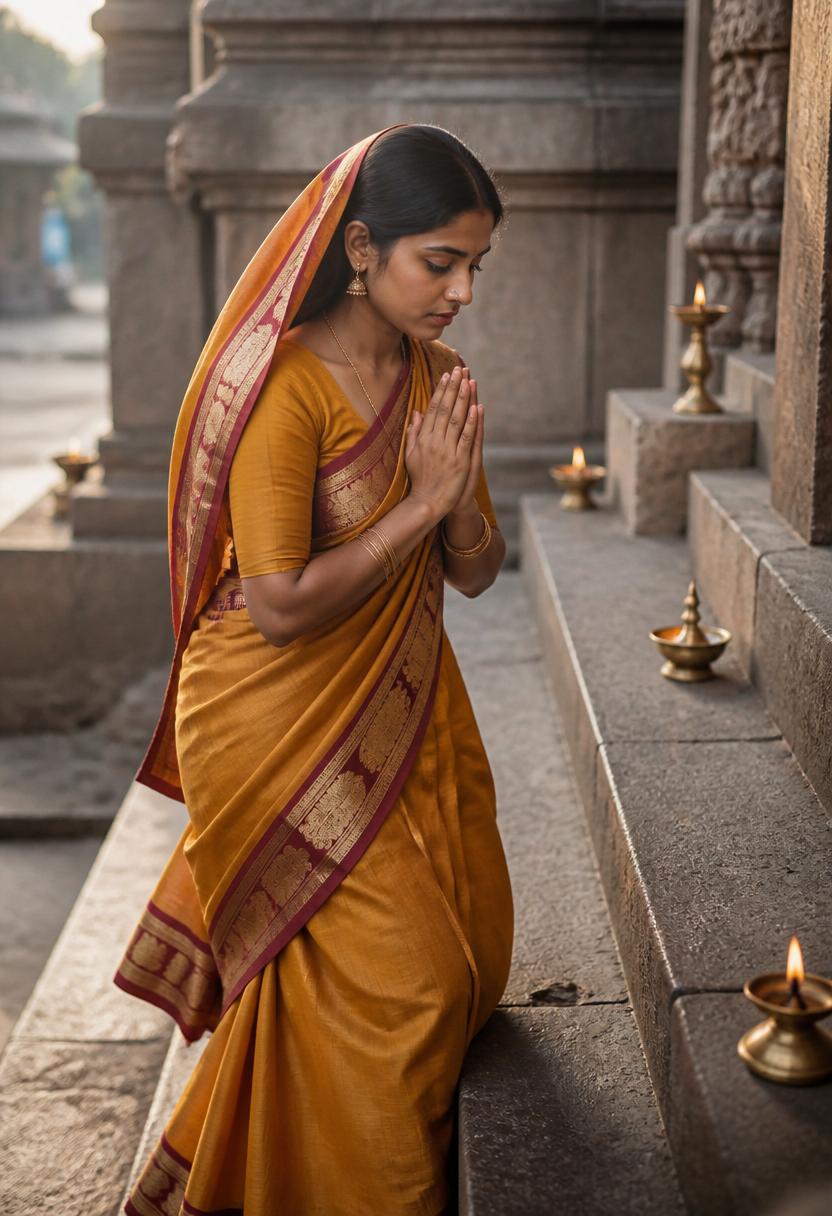
A modest, full-coverage South Indian drape worn for everyday temple darshan — pallu doubled across the front, never fanned.
- Drape time
- 8–10 min
- Help
- Solo
- Yardage
- 6 yd
Comfort scale
2/5
Occasion
Fabric
Body style
Stylist note · Doubled-pallu provides full coverage — a quiet, modest drape that suits every silhouette.
You will need
Before you begin
- ·Pure cotton or Arani silk 6 yd saree with a clear contrast border
- ·Cotton petticoat in saree-toned shade
- ·Closed-toe flats or temple sandals (removable for sanctum entry)
- ·4 small safety pins; the temple drape is minimalist
- ·A small kumkum and turmeric tin for the forehead and feet
Pre-drape prep
- 1.Iron the saree the night before; temple darshan is early morning.
- 2.Tie the petticoat snug at the natural waist; the temple drape sits high.
- 3.Identify the pallu's upper edge — that's what covers the head at the sanctum.
- 4.Apply kumkum and turmeric before draping; the parting and feet are visible at every step.
Step-by-step
4 steps
Step 1 of 4
Pleat and tuck Nivi-style at the navel; keep pleats narrow.
Step 2 of 4
Bring the pallu over the left shoulder, then fold it once and bring back across the chest.
Step 3 of 4
Tuck the folded pallu tip into the waist at the right side.
Step 4 of 4
Cover the head with the pallu's upper edge as you enter the sanctum.
Pleat & pallu anatomy
Why the drape sits the way it does
Neyveli temple drape is a modest South Indian everyday drape. The body pleats Nivi-style but the pallu is doubled across the front — over the left shoulder, folded once, then brought back across the chest and tucked at the right waist. The doubled pallu provides full coverage; the upper edge is pulled up over the head at the sanctum.
Fabric note
Choosing the right cloth
Pure cotton for daily darshan; Arani silk for weekly visits or special pujas. The border must be clearly contrasting — the doubled pallu makes the border read across the chest. Avoid heavy Kanjivaram or sequins.
Blouse pairing
Neckline · sleeve · lining
Elbow-sleeve cotton blouse with a modest round or boat neck. Cotton lining for comfort; temple visits run two to three hours. Avoid backless, halter, sleeveless.
Jewellery & finish
The last layer
Single gold chain, simple jhumkis, kumkum and turmeric.
Hair & makeup register
The full silhouette
Oiled centre-parted hair with a low chignon or long braid, jasmine if available. Kumkum at the parting, kohl-rimmed eyes, no lip colour or a soft natural rose. Single gold chain, simple jhumkis.
By silhouette
Stylist-curated for every body
petite
Reduce pallu folds; a single fold across the chest reads cleaner.
regular
The classic doubled pallu with the upper edge pulled up at the sanctum reads beautifully.
Plus-size
The temple drape is exceptionally flattering — the doubled pallu adds an elegant front panel.
Troubleshooting
If something slips
Pallu fold slipping at the right waist tuck
Tuck deeper into the petticoat drawstring channel.
Pallu's upper edge falling off the head at the sanctum
Pin invisibly behind the ear when entering the sanctum; remove when leaving.
Border not reading across the chest
Re-fold the pallu so the border lies on the outside of the fold.
Saree slipping during prostration
Pin pleats at the waistband through the petticoat.
Common mistakes
What not to do
- Fanned pallu — the temple drape is doubled, never fanned.
- Heavy bridal or party jewellery — temple register is modest.
- Bare head at the sanctum — pull the upper edge of the pallu over the head before entering.
- Sequined or heavy zari sarees — temple darshan requires restraint.
Care after wearing
So the saree lasts
- ·Hand-wash pure cotton in cold water; iron lightly while damp.
- ·Dry-clean Arani silk with a Tamil-trained cleaner.
- ·Store folded with the border on the outside fold.
- ·Air after each wear; never pack damp from morning dew.
Stylist's final check
Before the mirror
- Front pleats are five to seven, centred and Nivi-style.
- Pallu is doubled across the chest and tucked at the right waist.
- Border reads cleanly across the doubled pallu.
- Pallu's upper edge is ready to pull over the head at the sanctum.
- Kumkum, jhumkis, single chain — the silhouette is devotional and modest.